Ron Miller is an attorney who focuses on serious injury and wrongful death cases involving motor vehicle collisions, medical malpractice, and products and premises liability. If you are looking for a Maryland personal injury attorney for your case, call him today at 800-553-8082.

A lawsuit against Gilead Sciences, a prominent drug company known for its HIV medications, has been allowed to continue in federal court after the company filed a motion to dismiss the claims. Although the ruling dismissed some claims against the biopharma giant, it allowed all the core causes of action to continue deciding a decisive victory for the plaintiffs.  There is still a long way to go but these cases may have legs that could take the plaintiffs to victories at trial and ultimately a global settlement for all the victims.

The legal allegations against Gilead involve the company’s groundbreaking prescription drugs used to treat HIV.  In 2001, Gilead developed and released a first of its kind drug, tenofovir disoproxil fumarate (TDF) under the brand name Viread. TDF is a unique antiretroviral medicine that works by blocking an enzyme that HIV virus cells use to replicate and multiply. By preventing the virus cells from replicating, Viread and Gilead’s other TDF drugs stop HIV from growing and progressing into AIDS.

viread lawsuits
Gilead dominates, arguably with antitrust implications, HIV drugs known as antiretrovirals.  In the U.S. today, over 80% of patients on HIV treatment take one or more of Gilead’s products every day.
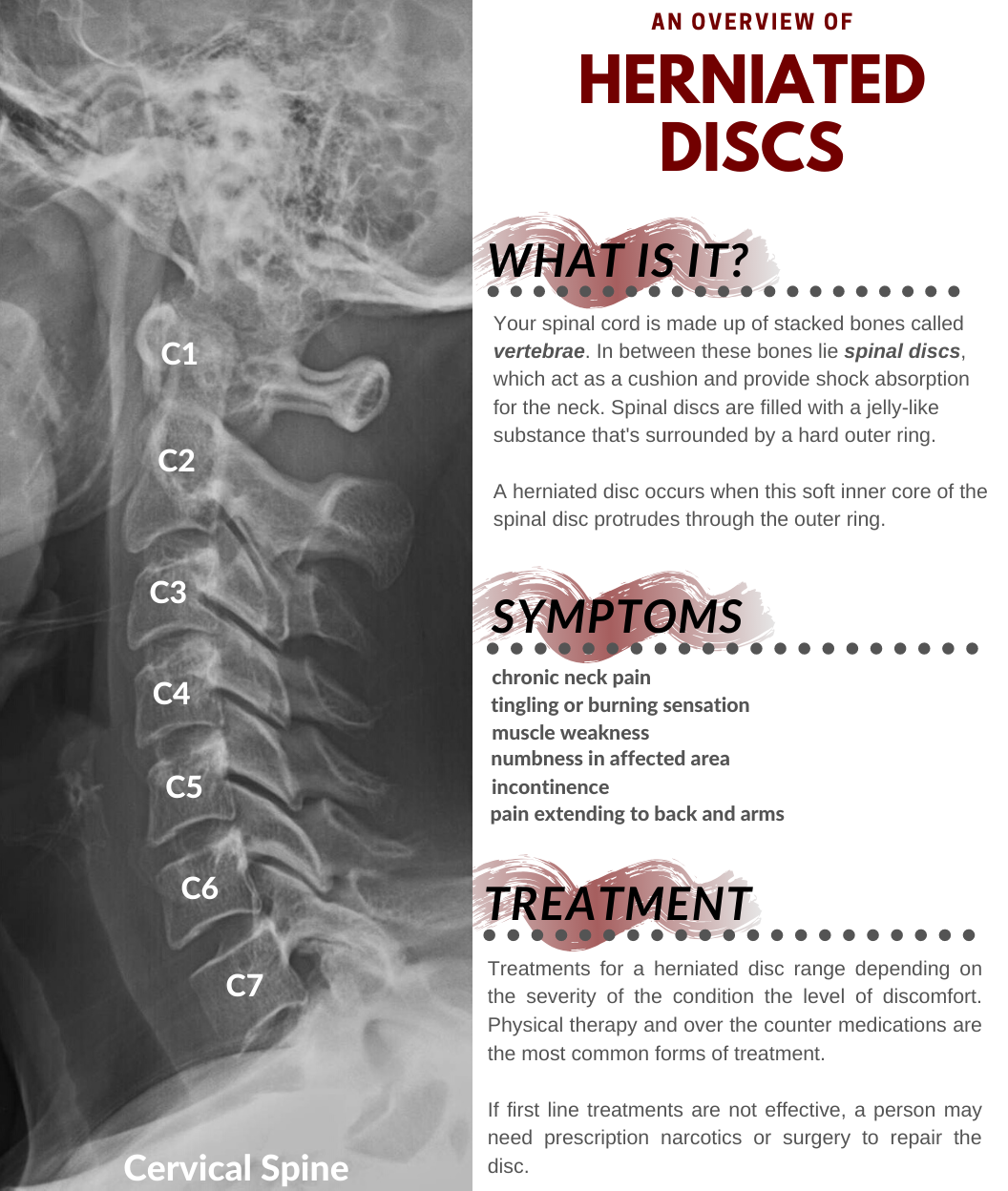
herniated discs

Click to enlarge

The first case I tried for Miller & Zois 18 years ago was a herniated disc injury.  I remember it like it was yesterday.  It was a car/light truck crash.  We got a $300,000 verdict in a case with a $15,000 settlement offer. The defense lawyer thought it was a nuisance case because there was no visible property damage. The jury set him straight.

Since then, our lawyers have handled hundreds of slipped disc injury accident claims for victims. If another plaintiffs’ law firm has handled more herniated disc injury lawsuits in Maryland, I’d like to know who that is. Our lawyers have spent a lot of time fine-tuning the science and the arguments to make at trial in these spinal injury cases.

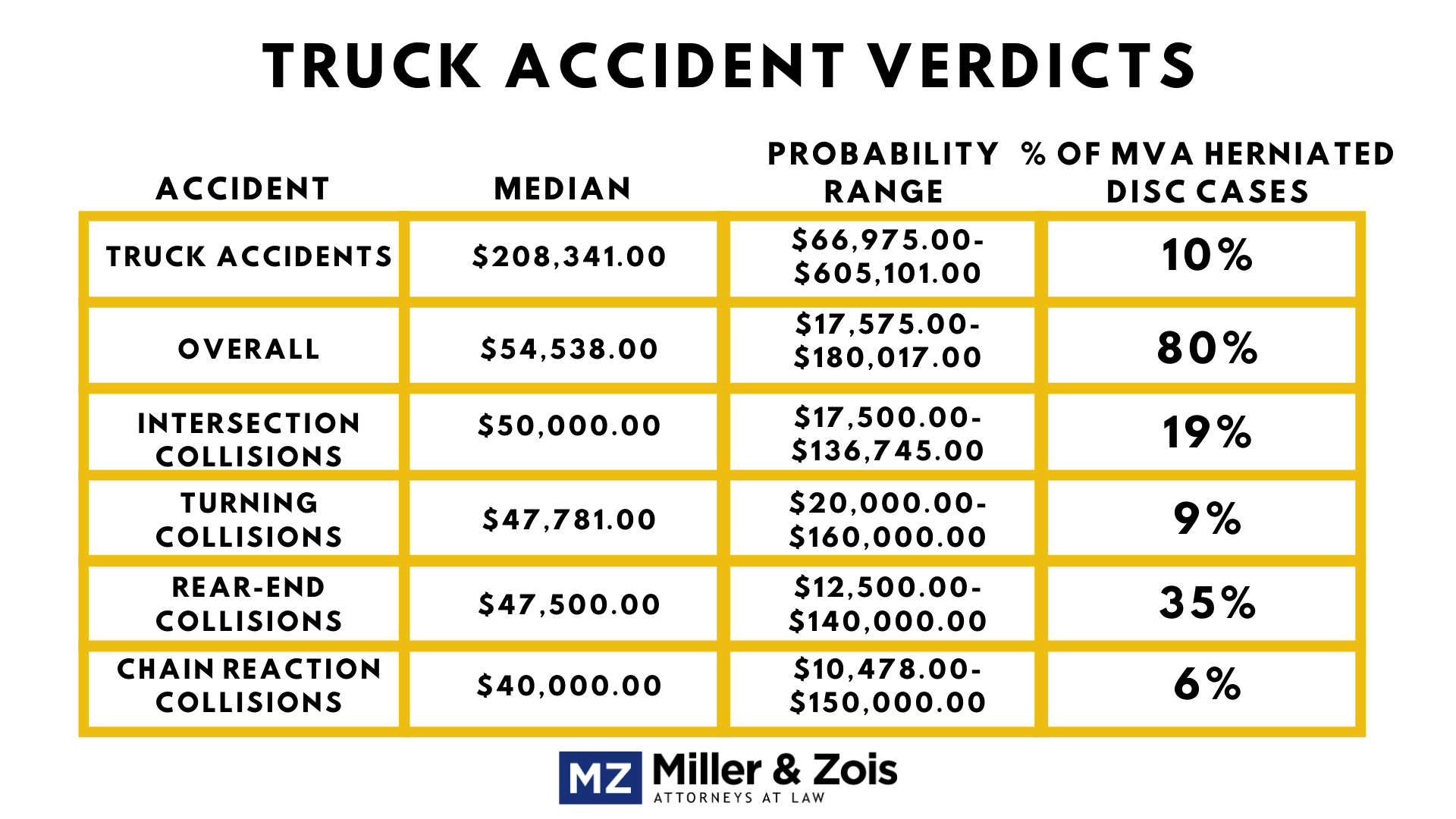
I have always been particularly interested in verdict statistics in disc injury claims. Yesterday, I found some interesting data that looks at the median value of herniated disc injury claims based on the type of vehicle crash. The data provides two things: the median result and a probability range of verdict.

Of the two, I think the most interesting is the probability range. In this Jury Verdict Research Study, the probability range is defined as the middle 50 percent of all awards arranged in ascending order in a sampling, 25% above and 25% below the median. In other words, it provides the 25th percentile and the 75th percentile of verdicts. I believe that for plaintiffs with a good law firm who knows how to prepare and try a disc injury lawsuit, I think the 75th percentile is probably the median.

Anyway, these are the numbers:

truck accident cases

The first thing that really stands out is the gap in the range, which is particularly pronounced as you might expect in truck accident crashes. I’m also surprised at how relatively low the statistics are for intersection accidents.

They are all motor vehicle accidents. What surprises me is how much more the value of herniated disc injuries explodes when taken outside of the motor tort context.  Look at these payouts by type of tort claim:

Continue reading

decision file suitThere are a variety of motivations that impact the victim’s decision to settle or go to trial.

The victim’s decision. It is worth underscoring: it is the victim’s decision. It is not a choice for the attorneys or the family. The victim has to choose the path that is best for them.

There are certainly some Maryland injury attorneys who do not see it that way.  It really is tempting — I’ve felt it — to think you know what is best for your client.  I’ve settled cases where I was convinced the offer would double in a matter of weeks.  But as a lawyer, your job really is to give your client the information to make an informed choice.

Here are the three key factors victims need to consider: risk, time, and emotional strain.

Continue reading

maryland auto accident lawyerBecoming the victim of an auto accident can have a profound effect on your life. Even though an accident can happen in the span of a few seconds, it can cause death or injuries and hardships that last months, years, or a lifetime. With that in mind, victims of auto accidents should seek an attorney to ensure that they are compensated for their injuries and/or losses. However, not every attorney is qualified to handle every case. Clients should ensure that they receive the representation that they deserve.

Here are five things to consider when hiring a Maryland car accident attorney:

History of Results

Breaking up with a client is something all personal injury attorneys do on a fairly regular basis. A lot of cases look promising.  But an investigation and review of the medical records can sometimes paint a very different picture.  This is particularly true in medical malpractice cases where the medical records read differently from what the patient remembers or believes.

For the most part, lawyers are free, as the client is, to sever the attorney-client relationship.  If you have already filed a lawsuit for the client, things are a bit more complicated because you will need to get court permission before withdrawing from the case.  Before a case is actually filed, however, breaking up is a lot easier.

Maryland Ethical Rules

viable personal injury case

Why can’t you get a lawyer on the phone?

I picked up the phone yesterday from someone I knew did not have a personal injury case.  He sent us an online intake weeks ago and was now cycling back to us.  This means he has called almost every personal injury lawyer in Maryland but did not keep track of who he had contacted.

The reason he did not have a case was that he had a mass tort case in litigation that has long since ended AND he was past the statute of limitations.  I spoke to the guy because he never got a personal injury lawyer on the phone to explain to why no one would take his case.

Gallagher v Mercy Medical, a new malpractice case handed down this week by the Maryland Court of Appeals,  is the most recent decision from our high court in which a plaintiff’s medical malpractice claims against Mercy Hospital were barred under the “one satisfaction” rule. This rule makes it tough to bring both an auto tort and a medical malpractice case related to the same accident.  If you are handling car accident cases and there might be a malpractice element to it, you want to read this case (or at least this blog post). The law here his not intuitive because it leads to something the law should not — injustice.

In short, the malpractice claims against Mercy related to treatment for injuries the plaintiff sustained in an auto accident. The plaintiff had already sued the at-fault driver and received settlements from his insurer and a UIM settlement from her own insurance company.

The Court of Appeals held that the settlements from the auto tort action constituted “full satisfaction” for the plaintiff’s alleged injuries and, therefore, her subsequent malpractice claims for those injuries were barred by the one satisfaction rule.

The Michigan Supreme Court came out a few weeks ago with a very interesting opinion in favor of the Plaintiff in a malpractice claim that most likely would fail in Maryland.

The doctor’s malpractice attorneys argued that the allegation that the doctor’s negligence reduced the risk of stroke from 10 to 20 percent to less than 5 to 10 percent was not enough to get the claim to a jury because the loss did not meet the burden of proof on proximate causation. The loss of chance rulingdoctor argued that Michigan law is whether the opportunity to achieve a better result was greater than 50 percent. Under this law, if the plaintiff could not prove that receiving the alleged appropriate treatment would have decreased his risk of injury by 50%, the plaintiff’s claim would fail.

Thankfully, a divided Michigan high court found that this is not the law and that malpractice cases such as this should be decided under a simple principle: the plaintiff is required to prove that the doctor’s negligence more probably than not caused the plaintiff’s injury.

Regrettably, Maryland goes in a different direction on these types of cases as I have previously discussed. One thing Maryland has Michigan beat on is collegiality among the judges on the court. Battles in the Michigan Supreme Court are both political and personal in a way that would shock Maryland lawyers. Judges quoting political statements made by other judges to the press, the judge that wrote the majority opinion writing separately to refute one judge’s personal attack – if you have no interest in this issue it is worth reading the opinion just to get a taste of what this different world is like.

Continue reading

anesthesiologist malpractice claims Anesthesia malpractice claims in Maryland have declined.  That is right.  Something good is happening.  Anesthesiologists have gotten better at delivering the appropriate amount of sedation. Why have they gotten better?  I would say malpractice lawsuits.  Anesthesiologists were forced to improve because their malpractice premiums were through the roof.  Today, they do not even rank in the top 10 specialties. Still, there are too many mistakes that anesthesiologists make that cause patient injury and death.

Quick Overview

Anesthesia is a medication that is added to a patient’s body prior to a surgical procedure to keep the patient relaxed and comfortable during the process. There are generally three subsets of anesthesia: the first being general anesthesia, the second being local anesthesia, and the third being regional anesthesia. General Anesthesia is used to cause a patient to become unconscious during the procedure while local anesthesia is used to numb a small area of the body where the procedure is being performed via an injection of medication. Regional anesthesia is very similar to local anesthesia where an injection of medication is used to numb a part of the body, but regional anesthesia different from local anesthesia concerns a larger part of the body, such as from the waist down.

hawaii medical malpractice
There are not many malpractice settlements and verdicts in Hawaii.  Here are three that I found and the awards or settlements are significant:

  • 2019, Hawaii: $18,760,000 Settlement. A woman suffered an end-stage renal disease after experiencing a sepsis-related infection while giving birth at Tripler Medical Center. She experienced repeated and increased hypotension and tachycardia episodes after being transferred to the postpartum unit. Her lab results showed that she developed sepsis and disseminated intravascular coagulopathy. She eventually suffered permanent kidney damage. An infectious disease expert confirmed the group A streptococcus that resulted in toxic shock syndrome, sepsis, and bacteremia. Upon being discharged, she underwent hemodialysis three times a week. Within two years, she was hospitalized for gallstones and increased fluid in her abdomen. She and her husband sued Tripler for failing to timely diagnose or treat her kidney failure. They allege that she now needed a kidney transplant and other organ transplants throughout her life.  The magistrate judge initially awarded $24,743,668. However, the federal government appealed the case. It eventually settled for $18,760,000.
  • 2013, Hawaii: $4,250,000 Award. A 15-year-old became paralyzed from the neck down after receiving steroid treatment for lupus. She developed a facial rash and slurred speech while visiting Hawaii with her family. She saw a pediatric rheumatologist, who diagnosed her with lupus. An MRI revealed some white matter density in her brain. Upon hospital admission, the rheumatologist prescribed weekly methylprednisone and prednisone doses to be taken for four weeks. The teenager responded well to the medication; her speech resolved, and her blood tests showed no increases in lupus antibodies. The rheumatologist had her continue this regimen. Right before the fourth week, the teen complained of muscle weakness. Her mother had her stop taking the medications. She eventually showed myopathy signs and was subsequently admitted to the hospital. She eventually could not move her body from the neck down. The teen and her mother sued the treating medical center for prescribing a high steroid dose. She now needed lifetime medical care because of her injuries. The first trial, held in 2009, awarded $6,150,000. However, the Hawaiian Supreme Court ordered a new trial based on erroneous evidence. The second trial’s jury awarded $4,250,000, which the court reduced to $1,800,000.
Contact Information